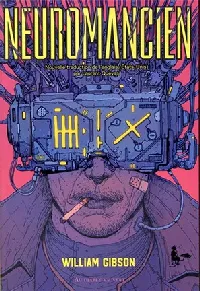
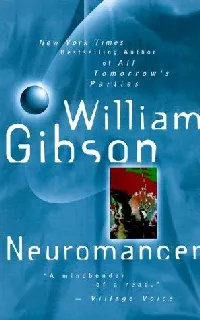
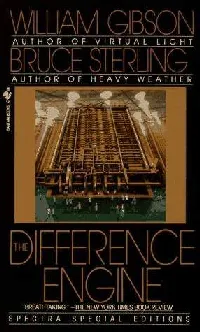
William Ford Gibson (born March 17, 1948) is an American and Canadian speculative fiction writer and essayist widely credited with pioneering the science fiction subgenre known as cyberpunk, a category from which he has repeatedly distanced himself. Beginning his writing career in the late 1970s, his early works were noir, near-future stories that explored the effects of technology, cybernetics, and computer networks on humans, a "combination of lowlife and high tech"—and helped to create an iconography for the Information Age before the ubiquity of the Internet in the 1990s. Gibson coined the term "cyberspace" for "widespread, interconnected digital technology" in his short story "Burning Chrome" (1982), and later popularized the concept, along with his usage of the "matrix", in his acclaimed debut novel Neuromancer (1984). These early works of Gibson's have been credited with "renovating" science fiction literature in the 1980s. After expanding on the story in Neuromancer with two more novels (Count Zero in 1986 and Mona Lisa Overdrive in 1988), thus completing the dystopic Sprawl trilogy, Gibson collaborated with Bruce Sterling on the alternate history novel The Difference Engine (1990), which became an important work of the science fiction subgenre steampunk.
 Author