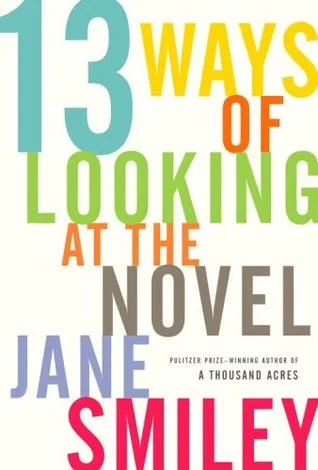
Jane Smiley defines the novel as a prose narrative of a certain length that possesses a protagonist and an authorial voice. She organizes her analysis into thirteen distinct perspectives, examining the form through its historical evolution, technical components, and psychological impact on the reader. The book details the mechanics of narrative arc, character development, and point of view while tracing the genre’s lineage from the eleventh-century Tale of Genji to contemporary works. A significant portion of the text documents Smiley’s own project of reading a hundred diverse novels to understand how specific technical choices sustain a long-form story.
Fiction writers and literary students use this book to deconstruct the architecture of storytelling and overcome creative blocks. The text provides a manual for identifying how circular or linear structures function and how tone dictates a reader’s emotional investment. Readers walk away with a taxonomy of the novel’s parts and a set of analytical tools to diagnose structural problems in their own manuscripts or to evaluate the formal complexity of the books they read for pleasure.
- Published
- 2005
- Language
- EN