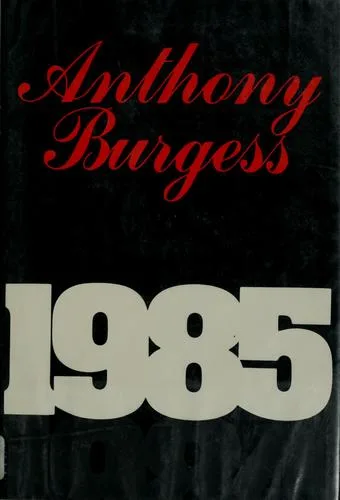
Anthony Burgess divides this work into a critical analysis and a fictional response to George Orwell’s dystopian vision. The first half examines how Orwell’s experience with postwar British austerity and wartime propaganda shaped the aesthetic of Nineteen Eighty-Four. Burgess argues that Orwell’s prediction missed the rise of consumer culture and powerful labor unions. The second half is a novella following protagonist Bev Jones, a widower navigating a future London dominated by mandatory union strikes, street gangs, and Middle Eastern investment. Here, the state enforces social stability through television and syndicalism rather than just brute police force.
This text attracts readers interested in political theory and the evolution of the surveillance state. It serves those who want to understand the limitations of classic satire when applied to contemporary socio-economics. Readers gain a framework for comparing Big Brother’s total control with the realities of corporate influence and bureaucratic inertia. By the end, the reader possesses a deeper technical understanding of how different economic pressures can erode individual agency, moving beyond the simple government-versus-citizen dichotomy found in traditional dystopian literature.
- Published
- 1978
- Language
- EN