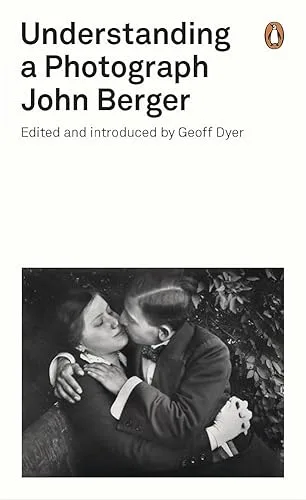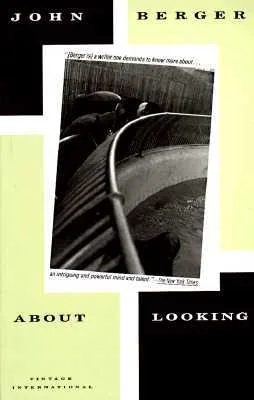
In this collection of essays, John Berger examines how the act of seeing is shaped by historical and social conditions. He investigates the displacement of animals from daily human life to marginalized spaces like zoos, arguing that this shift reflects a fractured relationship with the natural world. Berger analyzes the development of photography and its role in frozen memory, alongside critiques of painters such as Millet, Courbet, and Turner. He focuses on the peasant experience, the physical reality of labor, and the way professional art criticism often obscures the raw material presence of an image.
Art historians, sociology students, and photographers read this book to understand the political dimensions of visual perception. Readers learn to identify how class and industrialization influence their own aesthetic reactions. The text provides a framework for looking at a canvas or a photograph not as an isolated object of beauty, but as a record of human social relations. One finishes these essays with a sharper ability to decode the visual environment and a clearer grasp of the distance between modernist abstraction and the lived experience of the working class.
Deep and contemplative; a moderate read.
Best for readers like The Deep Diver. Which reader are you?
- Published
- 1980
- Language
- EN