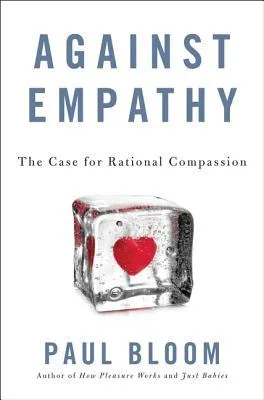
Paul Bloom argues that empathy—defined as the act of feeling another person's emotions—is a biased and unreliable guide for moral decision-making. He demonstrates how this emotional phenomenon acts like a spotlight, focusing on specific, relatable individuals while ignoring large-scale statistical suffering. Bloom uses psychological research to show that empathy triggers tribalism and poor policy choices because it prioritizes immediate personal connections over long-term global benefits. Instead, he proposes rational compassion, a framework that uses objective reasoning and cost-benefit analysis to help others effectively without the clouding influence of shared distress.
This book is for readers interested in moral philosophy, social psychology, and data-driven altruism. It appeals to those who want to understand why public discourse often becomes polarized by emotive anecdotes rather than logical solutions. Readers walk away with a toolkit for evaluating ethical dilemmas through a detached, utilitarian lens. The text provides a method for making charitable and political decisions based on measurable outcomes rather than reflexive emotional responses, encouraging a shift toward more deliberate and equitable social behavior.
- Published
- 2016
- Language
- EN
More by Paul Bloom
See all →
Readers also enjoyed