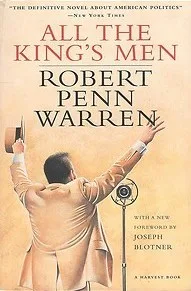
The novel traces the political trajectory of Willie Stark, a cynical Southern lawyer who transforms into a populist governor by exploiting the grievances of the working class. Narrated by Jack Burden, an aristocratic intellectual turned political fixer, the story examines the structural corruption required to enact social reform. Burden uses his historical training to uncover leverage against Stark’s rivals, while Stark centralizes power through a mixture of public works projects and extortion. Their collaboration reveals how idealistic intentions frequently collapse into moral compromise when confronted with the machinery of a state government.
Students of political science and history read this work to analyze the mechanics of populism and the ethical costs of statecraft. The narrative provides a framework for understanding how charismatic leaders consolidate authority by bypassing traditional institutions. Readers gain a perspective on the tension between personal integrity and political pragmatism. The text illustrates how historical research can be weaponized in a partisan environment and how individual choices impact a larger social landscape. By the end, a reader understands the cyclical nature of political ambition and the inevitability of collateral damage in the pursuit of power.
- Published
- 1946
- Language
- EN
More by Robert Penn Warren
See all →![The United States in Literature [with three long stories] -- Seventh Edition](https://kwbjoqloympvbpzbrfja.supabase.co/storage/v1/object/public/scan-images/catalog/f48162c6-7eb5-41ec-933b-9c4218489c7d-full.webp)
Readers also enjoyed