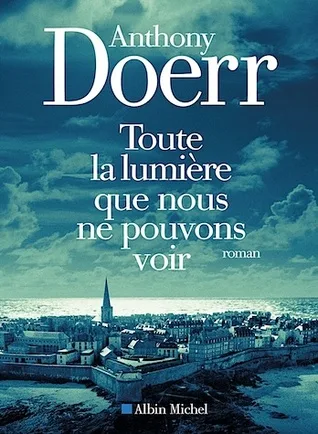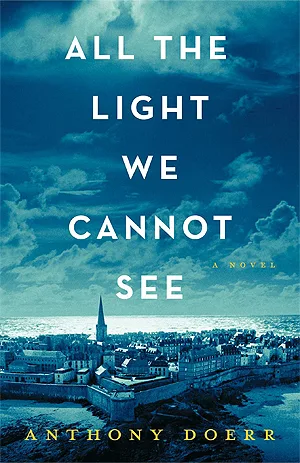
Marie-Laure LeBlanc, a blind girl living in Paris, flees to Saint-Malo with her father to escape the Nazi occupation, carrying a precious and potentially cursed diamond from the Museum of Natural History. Parallel to her story is that of Werner Pfennig, a German orphan whose aptitude for radio technology earns him a place in a brutal military academy and later a unit tracking resistance transmissions. Their lives converge during the Allied bombing of Saint-Malo in 1944, where the mechanics of radio waves and the shared experience of hiding bridge their opposing backgrounds.
This book is for readers interested in the technical and human facets of the Second World War. It attracts those who appreciate detailed historical reconstructions focusing on communication technology, biology, and the physical constraints of disability. Readers walk away with a specific understanding of how radio transmission shaped wartime intelligence and how individuals maintained personal integrity within collapsing social structures. It offers a precise look at the logistical reality of the French resistance and the training methods used within the Hitler Youth.
Insights from All the Light We Cannot See
“To see is to see the light.”
Marie-Laure finding her way through Saint-Malo by touching the tiny model house is unforgettable. It shows how much we rely on physical memory when the world goes dark.
“Is it right to do something only because everyone else is doing it?”
Werner is just a kid who loves radios and wants a better life. It is terrifying how easily a talent for math can be used for something so cruel.
The Sea of Flames diamond represents a heavy burden. People kill for it while the world around them is literally burning to the ground.
“Seventy-six years old and I can still feel like a child.”
Etienne staying inside his house for decades felt so relatable. Sometimes the world is too loud and the only safety is behind a locked door.
- Published
- 2014
- Publisher
- Scribner
- ISBN
- 9781476746586
- Language
- EN