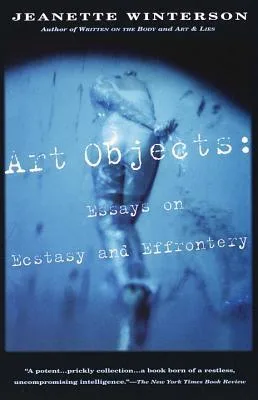
Jeanette Winterson argues that modern audiences have lost the capacity for deep attention, preferring the comfort of the familiar over the challenging demands of high art. These ten essays dissect the relationship between the creator, the object, and the spectator through a lens of disciplined aestheticism. Winterson details her own education in visual art, her encounters with the canvases of Vermeer and Picasso, and her defense of Modernist literature. She posits that art is a living force that requires a submission of the ego, rejecting the notion that creative work should serve as a mirror for the reader’s autobiography or political leanings.
This collection serves writers, students of aesthetics, and anyone frustrated by the commodification of culture. Readers turn to this text to find a intellectual justification for valuing difficult work and to understand the specific mechanics of poetic language. One finishes the book with a stricter set of standards for engagement and a vocabulary for discussing how a painting or a sentence functions as an independent reality. It provides a framework for looking at art without the mediation of personal sentiment or topical relevance.
- Published
- 1995
- Language
- EN
More by Jeanette Winterson
See all →

Readers also enjoyed