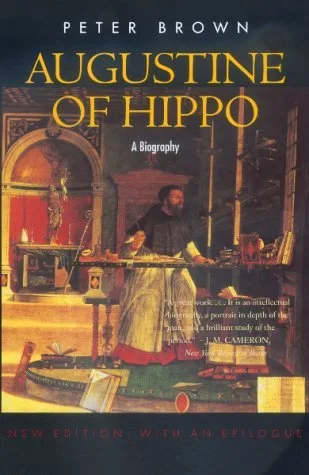
Peter Brown chronicles the life of the North African bishop from his youth as a Manichaean rhetorician to his tenure as the dominant intellectual force of late Roman Christianity. The narrative follows Augustine’s philosophical evolution through his conversion in Milan and his subsequent conflicts with the Donatists and Pelagians. Brown maps these theological shifts against the physical decline of the Roman Empire, illustrating how the Vandal invasion shaped Augustine’s final reflections on the City of God. The text treats Augustine not as an abstract icon, but as a developing thinker influenced by the social networks, landscapes, and political pressures of the fourth and fifth centuries.
This biography serves historians and students of religious history who require a contextualized view of late antiquity. Readers gain an understanding of how Greco-Roman classical thought transitioned into medieval Christian doctrine. The book provides a technical look at the intersection of private psychology and public administration in the ancient world. Instead of a devotional summary, the reader finishes the book with a clear map of the administrative and intellectual labor required to build the early Catholic Church during a period of imperial collapse.
- Published
- 1967
- Language
- EN