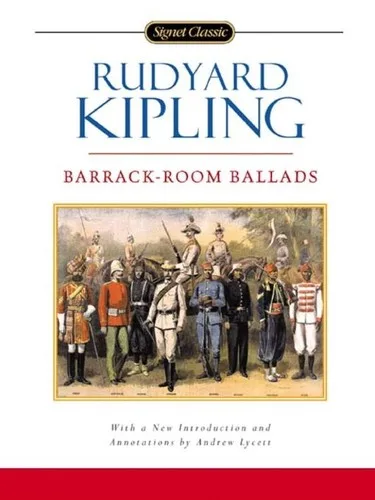
This collection focuses on the daily lives and vernacular speech of British infantrymen serving in the late nineteenth-century Indian Empire. Utilizing rhythmic, musical structures influenced by music hall entertainment, the poems document the harsh realities of military service, including combat exhaustion, cholera outbreaks, and the rigid hierarchy between common soldiers and their officers. Specific verses introduce Danny Deever during his execution and follow the narrator Gunga Din, an indigenous water carrier. The text presents physical labor, heat, and the visceral experience of the frontier without sanitizing the colonial environment.
Historians and fans of Victorian literature read this volume to examine the linguistic phrasing and perspectives of the common soldier, often overlooked in formal accounts of the period. Readers gain a direct understanding of the slang, grievances, and social codes that defined the British private’s existence in the 1890s. The book provides a technical look at how rhythmic verse can capture specific regional dialects and atmospheric conditions, leaving the audience with a starker, less romanticized view of imperial expansion and frontline duty.
- Published
- 1890
- Language
- EN