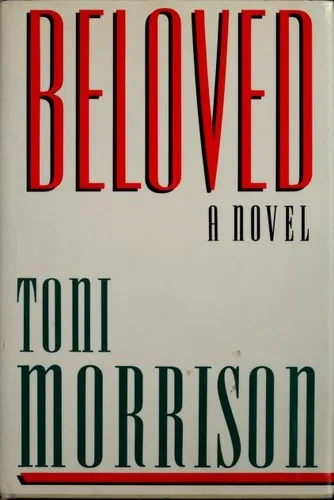
Sethe, an emancipated woman living in post-Civil War Ohio, remains haunted by the trauma of her life at Sweet Home, a Kentucky plantation. Her home, 124, is plagued by the volatile spirit of her eldest daughter, whom Sethe killed years earlier to prevent her recapture into slavery. When Paul D, a fellow survivor from the plantation, arrives to exorcise the house, a mysterious young woman named Beloved appears. The narrative reconstructs the psychological toll of the Middle Passage and the Fugitive Slave Act, documenting how maternal instinct clashes with a system that treats human beings as property.
Historians and fans of gothic fiction read this work to understand the internal reality of chattel slavery and the difficulty of reclaiming one’s body after systemic abuse. The text provides a framework for analyzing how collective memory and suppressed grief dictate the survival of a community. Readers walk away with a specific perspective on the necessity of "rememory"—the act of confronting a violent past to build a coherent identity. It serves those interested in the intersection of American history, haunting as a psychological state, and the structural legacy of racial violence.
Insights from Beloved
“Love is or it ain't. Thin love ain't love at all.”
Sethe choosing to kill her child to protect her is a heavy weight. It makes you realize how love can become a desperate, sharp edge under pressure.
“There is no bad luck in the world but whitefolks.”
Sweet Home was never a home. Even the nice memories there feel like a trap once those men arrive.
“He knew exactly how tight the lid was.”
Paul D carries his heart in a tobacco tin. It shows how men sometimes lock their feelings away just to survive another day.
“There is no bad luck in the world but whitefolks.”
Baby Suggs gave up on preaching after the tragedy. She realized that even a huge heart has a breaking point.
- Published
- 1987
- Publisher
- Vintage
- Language
- EN
Quotes by Toni Morrison
More →Freeing yourself was one thing, claiming ownership of that freed self was another.
Beloved
The function of freedom is to free someone else.
You wanna fly, you got to give up the stuff that weighs you down.
Song of Solomon