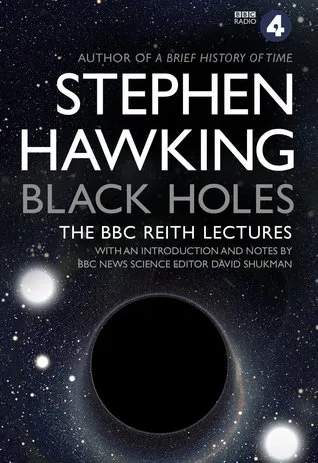
This book adapts two lectures delivered for the BBC, chronicling the evolution of how physicists understand the life cycle and properties of black holes. Stephen Hawking addresses the paradox that arises when quantum mechanics suggests these objects emit radiation, now termed Hawking radiation, despite the classical view that nothing escapes their gravity. He detail the mechanics of event horizons and the internal collapse of massive stars, ultimately arguing that information falling into a singularity may not be lost forever but could be preserved in another universe or via holographic principles at the surface.
Science students and casual readers of physics choose this text to grasp the fundamental conflict between general relativity and quantum theory. It provides a distillation of complex celestial mechanics without requiring a background in advanced mathematics. Readers gain a functional vocabulary for discussing space-time curvature and the thermal properties of cosmic voids. By the end, the reader understands why black holes are not infinite graveyards, but rather complex structures that interact with the wider universe through energetic discharge.
- Published
- 2016
- Language
- EN