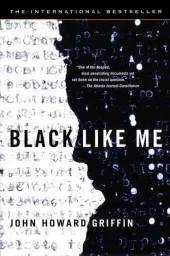
In 1959, white journalist John Howard Griffin underwent medical treatments, including skin-darkening medication and ultraviolet light exposure, to pass as a Black man in the segregated American South. He traveled through Mississippi, Alabama, Louisiana, and Georgia to document the lived reality of the Jim Crow era. His reportage details the "hate stare" from white strangers, the logistical difficulties of finding water or a restroom, and the systemic economic exclusion enforced by racial boundaries. The account serves as a primary source on the psychological effects of institutionalized racism and the physical danger inherent in crossing the color line.
This book serves students of mid-century American history and readers interested in undercover journalism. It provides a first-person record of how racial identity dictated movement and safety in the pre-Civil Rights movement South. Readers gain an understanding of the discrepancy between white perceptions of racial harmony and the actual daily humiliation experienced by Black citizens. It offers a technical look at how segregation functioned as a total social system, illustrating the bridge between individual prejudice and legal policy through the lens of one man’s temporary social transition.
Clear-cut; an easy read.
Best for readers like The Story Seeker. Which reader are you?
- Published
- 1961
- Language
- EN