
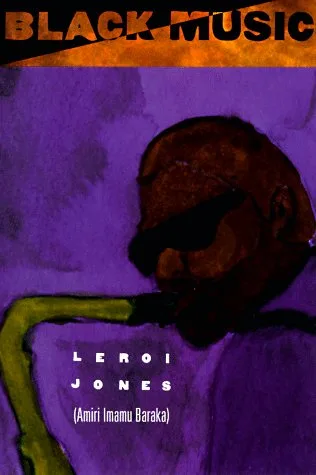
Amiri Baraka argues that the evolution of African American music tracks the shift from African captive to American citizen. He examines how the transition from field hollers and spirituals into the blues mirrors the psychological adaptation of people forced into a wage-labor society. By analyzing the technical shifts between swing, bebop, and avant-garde jazz, Baraka demonstrates how musical innovations functioned as reactions against middle-class assimilation. He frames the aesthetic choices of Black musicians as deliberate assertions of cultural identity within a hostile social structure.
This text serves historians and musicologists looking for a sociological framework to understand American sound. Readers gain an understanding of how economic status and racial segregation dictate the development of specific musical genres. The book provides a method for viewing art as a direct byproduct of political and social conditions rather than an isolated creative achievement. Those who study jazz and blues will find a technical analysis of how African rhythmic pulses survived and mutated within Western harmonic systems.
- Published
- 1963
- Language
- EN
![The United States in Literature [with three long stories] -- Seventh Edition](https://kwbjoqloympvbpzbrfja.supabase.co/storage/v1/object/public/scan-images/catalog/f48162c6-7eb5-41ec-933b-9c4218489c7d-full.webp)