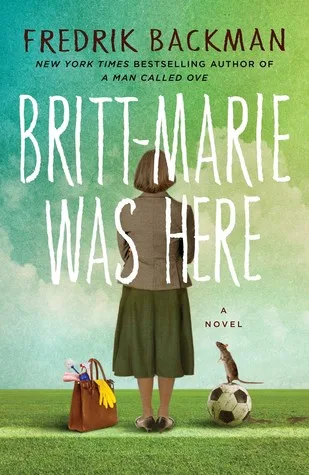
Sixty-three-year-old Britt-Marie defines her life through bicarbonate of soda, daily lists, and a dinner schedule that never deviates. When her husband’s infidelity forces her to abandon her sterile suburban existence, she accepts a temporary job as a recreation center manager in Borg, a dying town decimated by financial crisis. She encounters a community of eccentric locals, including a blind alcoholic and several unruly children who demand she coach their amateur soccer team. Despite her lack of sports knowledge and her rigid social anxieties, she begins to reorganize the town’s chaos while confronting her own decades of invisibility.
Readers who appreciate character-driven fiction and dry, situational comedy turn to this story for its unsentimental look at late-life independence. It appeals to those interested in the friction between rigid social etiquette and the messy reality of human connection. The audience walks away with an understanding of how small, local responsibilities can replace lost identities. Rather than focusing on grand gestures, the narrative shows how practical persistence and the simple act of being needed can reshape a person's surroundings and sense of self.
Insights from Britt-Marie Was Here
“At a certain age almost all the questions a person asks oneself are about one thing: how should you live your life?”
Britt-Marie keeps her cutlery drawer perfectly organized because her life feels completely empty. It shows how people use small rituals to survive when they feel invisible at home.
“One morning you wake up with more life behind you than in front of you, and you don’t understand how it happened.”
The way she scrubs every surface in Borg is heartbreaking. She just wants someone to notice she was there.
“He was the sort of man who was always in the right because he never let anyone else finish a sentence.”
Kent treated her like a supporting character in his own story for decades. It is terrifying how easily a person can disappear into someone else's shadow.
“Football is a curious game. It doesn’t ask to be loved. It demands it.”
Seeing her learn to love a messy game like football felt like a huge victory. Sometimes the things we hate are just things we haven't shared with friends yet.
- Published
- 2014
- Publisher
- Atria Books
- ISBN
- 9781501142536
- Language
- EN