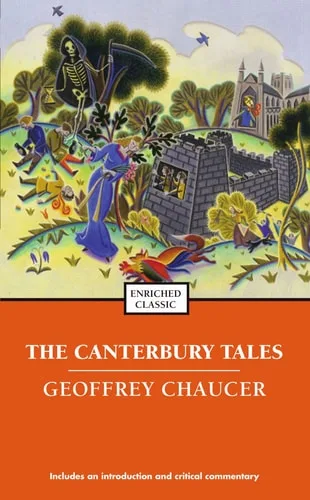
Geoffrey Chaucer assembles a diverse group of thirty pilgrims at the Tabard Inn, all traveling toward the shrine of Saint Thomas Becket. To pass the time, the travelers engage in a storytelling competition proposed by the host. The collection includes twenty-four distinct narratives ranging from the Knight’s noble romance to the Miller’s crude comedy and the Wife of Bath’s defense of female sovereignty. These individual tales utilize varied styles to depict fourteenth-century social hierarchies, religious hypocrisy, and the frictions existing between different economic classes in medieval England.
Students of English literature and history enthusiasts read this edition to encounter the foundational development of the English vernacular. Readers observe how humor and satire function as tools for social commentary within a rigid class system. By finishing the text, the reader gains a concrete understanding of medieval cultural norms and the shift from courtly ideals to a more secular, merchant-driven society. It provides a technical look at early narrative structures and the transition from oral traditions to written literary heritage.
Insights from Canterbury Tales
“For he that wynketh, whan he sholde see.”
A rooster almost dies because he is too vain to stop singing for a fox. Chanticleer is every guy who likes the sound of his own voice. He nearly gets eaten for it.
“And thus they deye, and bothe tweye.”
Three guys go looking for Death to kill him but find gold instead. They end up murdering each other over it. You realize that humans are their own worst enemy.
“The hoost shal be oure governour.”
This whole pilgrimage is just an excuse to gossip and drink. Nobody is actually praying. They just want to win a free dinner at the end of the road.
“For myn entente is nat but for to wynne.”
Pious people in this book are usually the biggest scammers. The Pardoner sells fake relics while admitting he is a greedy liar. He does not even care who knows.
- Published
- 1990
- Publisher
- Simon and Schuster
- ISBN
- 9780671727697
- Language
- EN