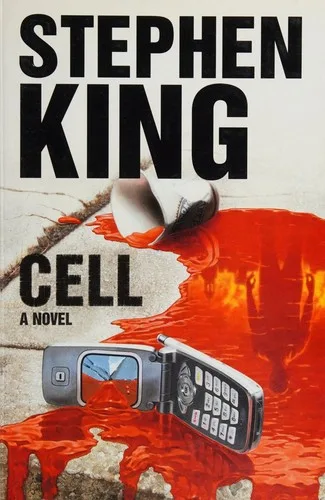
On a busy afternoon in Boston, a rhythmic signal known as the Pulse broadcasts through every active mobile phone, instantly deleting the personalities of users and replacing them with homicidal rage. Artist Clay Riddell witnesses the immediate collapse of society as "phoners" begin slaughtering anyone within reach. Clay joins a small group of survivors to trek across a devastated New England, heading toward Maine to locate his young son before the boy answers his own phone. Along the way, they observe the infected victims transitioning from mindless predators into a telepathic hive mind capable of levitation and collective strategy, suggesting that the signal has rewritten human biology into a new, organized species.
Fans of apocalyptic fiction read this book for its visceral depiction of technical infrastructure turning against its creators. It appeals to readers who enjoy high-speed survival horror and gritty descriptions of societal breakdown. The audience walks away with a specific distrust of constant connectivity and a grim look at how biological evolution might occur through a digital medium. The narrative provides a blunt examination of how quickly inherited human traits vanish when a fundamental communication tool becomes a weapon.
Practical, clear-cut and escapist; an easy read.
Best for readers like The Escapist Adventurer. Which reader are you?
Insights from Cell
“Civilization was a thin layer of ice on a deep lake of chaos.”
Clay sees the world end in a second near Boston Common. People just lose their minds because of a phone call. It makes you wonder how thin the ice really is.
“They were all together. They were one.”
The way the phoners sleep in parks together is haunting. They stop being people and start being a single, terrifying brain. Privacy feels like a luxury after seeing that.
Alice clutching her sneaker is what broke me. In a disaster, it is the small, useless objects that keep us human. Once she lost that, she was gone.
“The pulse was a software upgrade that crashed the hardware.”
Technology usually feels like progress. Here, it is just a delivery system for a virus. It turns our own tools against our basic instincts.
- Published
- 2006
- Language
- EN
Quotes by Stephen King
More →Books are a uniquely portable magic.
On Writing
The most important things are the hardest to say, because words diminish them.
The Body