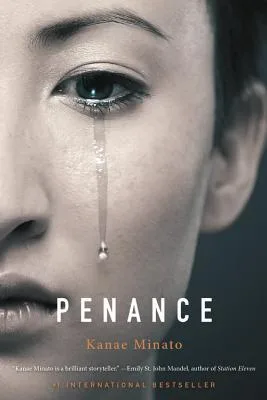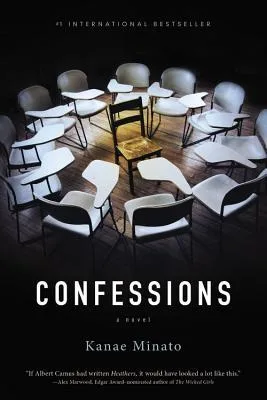
Yuko Moriguchi, a middle school teacher, announces her resignation following the death of her four-year-old daughter, Manami. While the police ruled the drowning an accident, Moriguchi identifies two students in her class as the killers. She details her plan for cold-blooded retribution, involving the injection of HIV-contaminated blood into their milk cartons. The narrative shifts through multiple perspectives, documenting the psychological deterioration of the two boys, the frantic reactions of a protective mother, and the lasting cycle of cruelty within the classroom.
Readers who value meticulous psychological plotting and non-linear storytelling choose this book for its clinical look at juvenile crime and legal loopholes. It attracts those interested in the breakdown of social structures like the Japanese family unit and the education system. The audience finishes the book with an understanding of how grief mutates into a calculated desire for suffering and how one act of violence triggers a sequence of irreversible domestic and social collapses.
Inward-looking; a moderate read.
Best for readers like The Empathetic Explorer. Which reader are you?
Insights from Confessions
Being a mother doesn't automatically make someone a saint. Some mothers love their own image more than their actual children.
The way the students harassed Naoki showed how cruel self-righteousness feels. They felt entitled to hurt him because they were on the right side.
“This is the day your life ends.”
Shuya thought he was the smartest person in the room. He never realized his teacher was ten steps ahead of his ego.
“Just kidding.”
Revenge does not always happen in a dark alley. Sometimes it happens in a quiet speech during the last period of school.
- Published
- 2008
- Language
- EN