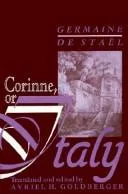
Set against the backdrop of an eighteenth-century Grand Tour, this novel centers on the intense intellectual and emotional connection between Lord Oswald Nelvil, a grieving Scottish aristocrat, and Corinne, a celebrated Italian improvisational poet. As they travel through Rome, Naples, and Florence, the narrative functions as both a tragic romance and a detailed cultural treatise. The text provides extensive commentary on Italian art history, religious architecture, and the contrasting social customs of Britain and continental Europe, framing Corinne as a personification of creative freedom versus the restrictive domestic expectations placed upon women.
Historical scholars and readers of Romantic literature turn to this work to examine the development of national identity and the early nineteenth-century feminist critique of patriarchal society. It serves as a primary source for understanding how gender roles influenced the reception of female genius in a period of shifting political borders. Readers gain a technical perspective on the aesthetics of the period and a clear view of the tensions between personal independence and the rigid requirements of social class and lineage.
- Published
- 1786
- Language
- EN