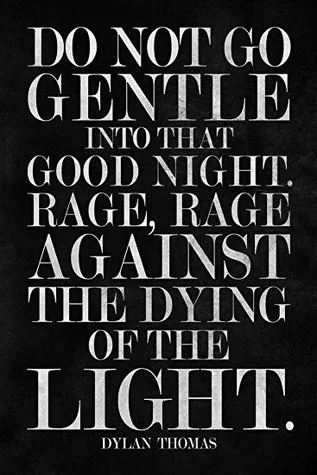
This villanelle serves as a poetic exhortation against passive death, composed by Dylan Thomas as his father’s health declined. It employs a rigid nineteen-line structure to categorize four types of men—the wise, the good, the wild, and the grave—who each discover at the end of life that their work or experiences remain incomplete. Through the repetitive refrains of "dying of the light" and "rage against the dying of the light," the poem argues that individuals should maintain a fierce, active defiance when facing their mortality rather than accepting it with quiet resignation.
Readers of classic literature and those grappling with loss or aging turn to this poem for its direct stance on human agency. It appeals to people seeking a vocabulary for grief that prioritizes vitality and willpower over submission to natural decay. The reader walks away with a framework for viewing the end of life as an active struggle, seeing persistence and emotional intensity as the final meaningful acts of a conscious mind.
- Published
- 1951
- Language
- EN