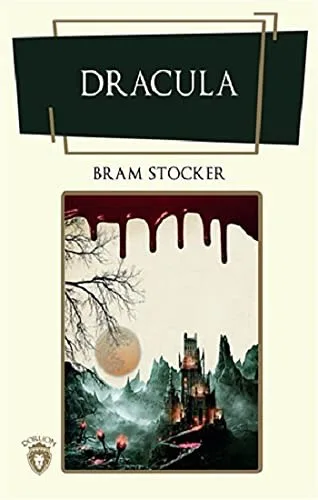
Jonathan Harker, a young solicitor, travels to the Carpathian Mountains to finalize a London property purchase for Count Dracula. After realizing he is a prisoner in a castle inhabited by the undead, Harker escapes, but the Count successfully relocates to England. Using a series of diaries, letters, and phonograph recordings, the narrative follows a small group including Abraham Van Helsing and John Seward as they track the vampire. They utilize blood transfusions, crucifixes, and garlic to protect Mina Harker while hunting the Count across Europe to destroy him with a bowie knife and a stake.
This book serves readers of gothic fiction and historians of Victorian social anxieties. It appeals to those interested in the transition from ancient superstition to modern scientific methodology. Readers gain a foundational understanding of vampire mythology, specifically the rules governing shape-shifting and sunlight. The text provides a technical look at late nineteenth-century technology, such as stenography and telegrams, used as weapons against a medieval threat. By the end, a reader understands the specific tropes that established the modern horror genre.
Insights from Dracula
“The castle is a veritable prison, and I am a prisoner!”
Jonathan Harker's fear doesn't start with blood. It starts with being trapped in a house where the doors are locked from the outside.
“A woman’s heart, which we are all supposed to fear, is actually our greatest strength.”
Mina represents the smartest person in the room. She organizes all the messy journals and clippings to find the truth while the men just panic.
“There was a low, thick gurgling, as if of a whole sea of blood.”
The vampire is mostly a shadow in his own story. The real horror is how his presence slowly drains the life out of Lucy while her friends watch.
“We are in a nineteenth century up-to-date with a vengeance.”
Modern technology feels so fragile here. They use phonographs and typewriters to fight an ancient evil that doesn't care about their progress.
- Published
- 1897
- Publisher
- Wordsworth Editions
- ISBN
- 9780393970128
- Language
- EN

![Dracula’s Guest [Short Story]](https://kwbjoqloympvbpzbrfja.supabase.co/storage/v1/object/public/scan-images/catalog/dcb7aa10-5710-4f6e-a47e-aa85cd9a6a4e-full.webp)