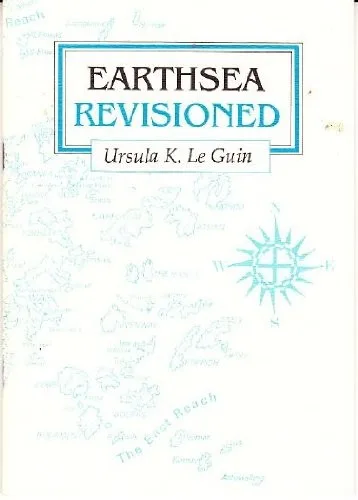
In this published lecture, Ursula K. Le Guin examines the gendered power structures and linguistic foundations of her Earthsea archipelago. She critiques the internal logic of her earlier novels, specifically the rule that only men could be wizards and that female magic was inherently inferior or "wicked." Le Guin addresses the exclusion of women from the school at Roke and analyzes how she initially adopted a male-centric heroic tradition. By re-evaluating characters like Tenar and Tehanu, she explains her shift toward a narrative that values domesticity, bodily experience, and non-hierarchical strength.
Fantasy writers and literary scholars read this text to understand how an author reconstructs a fictional world to reflect evolving social consciousness. It appeals to readers interested in the intersection of feminism and speculative world-building. The reader walks away with a framework for identifying patriarchal biases in epic storytelling and a template for revising established mythologies. It provides a technical look at how a creator can dismantle and rebuild their own creative legacy to better represent human agency and diverse perspectives.
- Published
- 1993
- Language
- EN