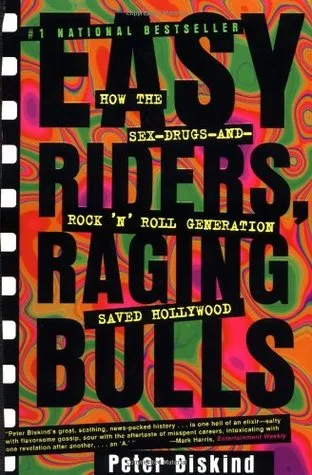
Easy Riders, Raging Bulls: How the Sex-Drugs-and-Rock 'n' Roll Generation Saved Hollywood
Peter Biskind chronicles the collapse of the traditional studio system and the subsequent rise of independent-minded directors in the late 1960s and 1970s. He details how figures like Francis Ford Coppola, Martin Scorsese, and Steven Spielberg wrestled creative control away from aging executives to produce gritty, auteur-driven films like The Godfather, Taxi Driver, and Jaws. The narrative documents the influence of European cinema, the widespread use of cocaine and marijuana on film sets, and the volatile personal rivalries that defined the era. It concludes by showing how the emergence of the blockbuster model eventually ended this experimental period.
Film historians and enthusiasts of New Hollywood read this work to understand the specific logistical and social conditions that permitted a brief era of director-led filmmaking. The text provides a granular look at how ego, drug culture, and financial risk-taking dictated production decisions. Readers walk away with a clear timeline of how the industry transitioned from the creative freedom of the early seventies to the formulaic, marketing-heavy strategies that dominate modern studio operations.
- Published
- 1998
- Language
- EN
More by Peter Biskind
See all →
Readers also enjoyed