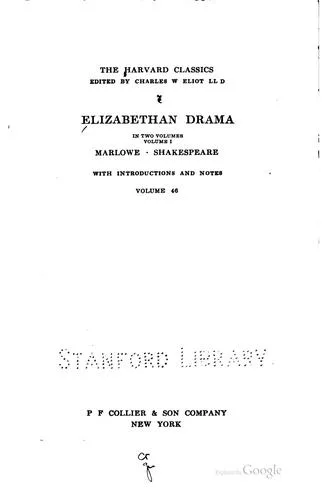
Published in 1910 as part of the Harvard Classics series, this volume compiles defining theatrical works from the English Renaissance. It centers on the transition from medieval morality plays to the complex psychological portraits of the late sixteenth century. The collection features Christopher Marlowe’s Edward the Second, which examines the political downfall of a monarch, alongside William Shakespeare’s Hamlet and The Tempest. These texts demonstrate the development of blank verse, the use of the soliloquy to reveal internal conflict, and the integration of classical Roman structures into vernacular English drama.
This book is intended for students of English literature and readers interested in the evolution of Western stagecraft. It provides a primary source record of how playwrights shifted from religious allegory to secular humanism. Readers acquire a direct understanding of Elizabethan linguistic patterns and the technical constraints of early modern performance. By studying these scripts together, the reader gains a clear perspective on the stylistic differences between Marlowe’s rhetorical intensity and Shakespeare’s metaphorical density.
- Published
- 1910
- Language
- EN