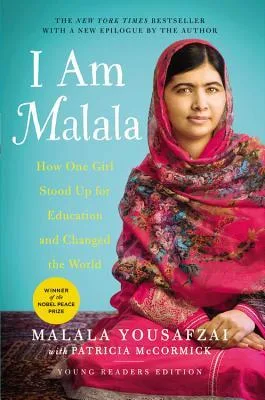
Malala Yousafzai chronicles her life in Pakistan’s Swat Valley under the rising influence of the Taliban. The narrative follows her upbringing in a school founded by her father and the subsequent restrictions placed on female students when militants took control of the region. She details her decision to write a public blog about life under extremism and the 2012 assassination attempt she survived while riding the school bus. The text focuses on the logistics of her advocacy and the physical recovery process after relocating to England for medical treatment.
This young readers' edition serves students and educators looking for a historical account of gender inequality and religious extremism. Readers obtain a factual understanding of how political shifts impact civil rights and the specific risks involved in activism. The book provides a clear perspective on the global education gap and the legal barriers facing girls in conflict zones. It leaves the reader with a concrete example of how individual protest functions against systemic oppression.
Clear-cut; a moderate read.
Best for readers like The Evidence Seeker. Which reader are you?
Insights from Eu sunt Malala
“I am the same Malala. My ambitions are the same. My hopes are the same.”
Malala felt like a normal girl who loved Twilight and argued with her brothers. She wasn't a saint. She was just a student who refused to be silenced.
“Who is Malala?”
The day she was shot started with a normal exam. She was worrying about her grades when the gunman boarded the bus. Normalcy can shatter in a second.
“If you hit a Talib with your shoe, there is no difference between him and you.”
Speaking out brought a target to her back. She knew the risks and kept writing her blog anyway. Courage is doing the right thing despite the shaking in your hands.
Her mother started learning to read while Malala was recovering. Education became a family goal. It was their way of reclaiming their dignity.
- Published
- 2015
- Publisher
- Polirom
- ISBN
- 9786068811543
- Language
- EN



