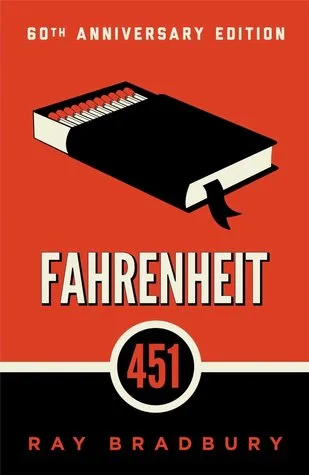
Guy Montag is a fireman in a future society where the government mandates the destruction of all printed literature. Instead of putting out fires, Montag uses a kerosene-spraying hose to incinerate books and the homes of those who hide them. The population remains distracted by wall-sized television screens and constant biological stimulation, fostering a culture of shallow compliance. After meeting a teenage neighbor named Clarisse and witnessing a woman choose to burn with her library, Montag begins stealing volumes to read secretly. His rebellion puts him in direct conflict with his captain, Beatty, who defends the state's enforcement of total intellectual homogeneity.
Readers of dystopian fiction and classic science fiction seek this book to examine how mass media and government censorship erase individual history. The story appeals to those interested in the tension between technological convenience and the preservation of human memory. It provides a stark look at the loss of privacy and the consequences of choosing entertainment over critical thought. After reading, the audience understands the vulnerability of oral traditions and the effort required to protect unconventional ideas from a majority that prefers comfortable ignorance.
Insights from Fahrenheit 451
“Are you happy?”
Clarisse asks Montag if he is happy. That single question ruins his entire life. It shows how one honest conversation can break a facade.
“That's my family.”
Mildred stays plugged into her walls while her husband suffers. It made me realize how easy it is to hide behind noise. We use screens to ignore the people right next to us.
“A book is a loaded gun in the house next door.”
Beatty knows more about books than the people who love them. He uses that knowledge to destroy others. It is a scary reminder that intelligence can be weaponized against truth.
“It doesn't think anything we don't want it to think.”
The mechanical hound represents a fear that never sleeps. It tracks you by your unique chemical scent. Technology feels most dangerous when it becomes personal.
- Published
- 1953
- Language
- EN


![The Language of Literature [Grade 6]](https://kwbjoqloympvbpzbrfja.supabase.co/storage/v1/object/public/scan-images/catalog/9fbc8796-2f4a-43c4-a550-d219e683779b-full.webp)