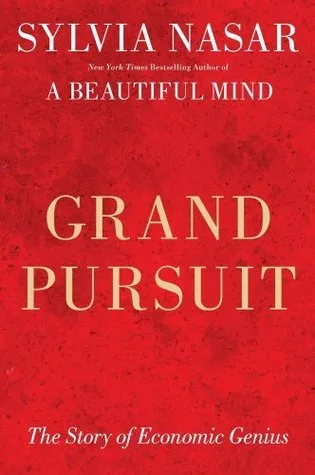
Sylvia Nasar chronicles the historical shift in economic thought from a belief in inevitable poverty to the conviction that humans can consciously manage and improve their material conditions. The narrative moves through the lives and intellectual breakthroughs of key figures starting with Victorian thinkers like Jane Marcet and Charles Dickens, transitioning into the formal theories of Alfred Marshall, John Maynard Keynes, and Friedrich Hayek. Nasar details how these individuals responded to global crises, such as the industrial revolution, hyperinflation in the Weimar Republic, and the Great Depression, by developing tools to measure and influence national income, employment levels, and price stability.
This book is intended for readers interested in the intellectual history of capitalism and the evolution of social engineering. It serves those who want to understand how abstract mathematical models translate into fiscal and monetary policies that affect modern life. Readers leave with a clear timeline of how economic science moved from a descriptive philosophy to a predictive instrument of government policy. It provides a foundation for identifying the origins of current debates regarding market interventions versus free-market autonomy.
- Published
- 2011
- Language
- EN