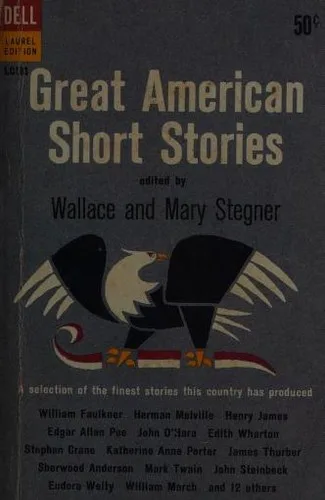
This anthology traces the evolution of American fiction from the nineteenth-century gothic and romantic styles of Washington Irving and Nathaniel Hawthorne to the mid-twentieth-century realism of John Steinbeck and Eudora Welty. The collection assembles twenty-six stories that depict specific regional landscapes, including the gritty streets of Stephen Crane’s New York, the Southern gothic frontiers of William Faulkner, and the psychological domesticity found in Edith Wharton’s prose. The selections highlight technical shifts from the structured tall tales of Mark Twain and the macabre puzzles of Edgar Allan Poe toward the character-driven modernist experiments of Katherine Anne Porter and Sherwood Anderson.
Students of literature and aspiring writers use this collection to study the formal foundations of the American short story. Readers gain a technical understanding of how prose transitioned from flowery, moralistic narratives into the lean, observational styles of the postwar era. By working through these entries chronologically, the reader learns to identify specific shifts in dialogue, pacing, and regional dialect. The book serves as a historical record of how domestic life, warfare, and economic hardship shaped the national literary identity across two centuries.
- Published
- 1957
- Language
- EN