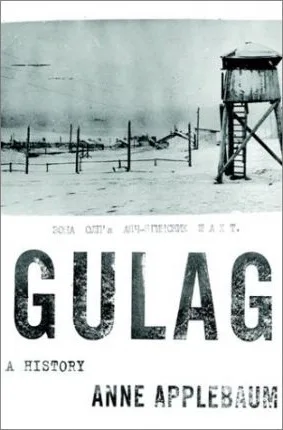
Anne Applebaum provides a chronological account of the Soviet Union"s concentration camp system, spanning from the 1917 Revolution to the Glasnost era. She documents the administrative evolution of the Main Administration of Corrective Labor Camps (GULAG) and the economic role these sites played in Joseph Stalin’s industrialization strategy. The narrative draws on newly opened Soviet archives and survivor memoirs to detail the daily mechanics of camp life, including the rationing of food based on work output, the hierarchy between political prisoners and common criminals, and the specific hardships faced by children and women.
This book serves historians and readers of political science who seek to understand the structural logic of totalitarian regimes. It provides a technical look into how a state-sponsored penal system becomes integrated into a national economy through forced labor. Readers gain a clear understanding of the institutional mechanisms used to suppress dissent and the scale of human loss within the Eastern Bloc. By the end, the reader possesses a factual framework for comparing Soviet repression with other twentieth-century catastrophes.
- Published
- 2003
- Language
- EN
More by Anne Applebaum
See all →


Readers also enjoyed