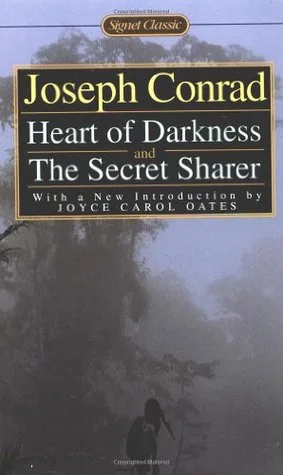
Charles Marlow, a seasoned sailor, narrates his passage aboard a steamship into the Congo Free State to retrieve Mr. Kurtz, a highly successful ivory agent who has vanished into the inland wilderness. As Marlow moves upstream, he encounters the physical decay of colonial stations and the systematic abuse of the local population by European traders. Upon reaching Kurtz, Marlow finds a man who has abandoned moral constraints to establish himself as a brutal deity among the forest’s inhabitants, revealing the psychological collapse that occurs when absolute power meets isolation.
Readers of classic literature and historical fiction turn to this narrative to examine the specific mechanics of European imperialism and the fragility of social norms. The text serves those interested in the psychological deterioration that accompanies moral compromise in lawless environments. A reader finishes the book with a concrete understanding of how greed and geographical isolation strip away the veneers of civilization, leaving behind a stark look at human capacity for cruelty.
Deep, inward-looking, contemplative, open-ended and thought-provoking; a moderate read.
Best for readers like The Wisdom Collector. Which reader are you?
Insights from Heart of Darkness
“He was hollow at the core.”
Marlow sits on that boat in the dark and realizes Kurtz was just hollow. Success without a soul is just a loud noise in the woods.
“Going up that river was like traveling back to the earliest beginnings of the world.”
The river feels like traveling back to the start of the world. It makes you feel tiny and very temporary.
“The wilderness had found him out early.”
Kurtz was supposed to be a genius with high ideals. Instead he just let the silence of the jungle turn him into a monster.
“I don't like work. I like what is in the work.”
Marlow finds a book about seamanship in a lonely hut and it keeps him sane. Sometimes simple work is the only thing that stops the mind from breaking.
- Published
- 1899
- Publisher
- Green Integer
- ISBN
- 9781892295491
- Language
- EN