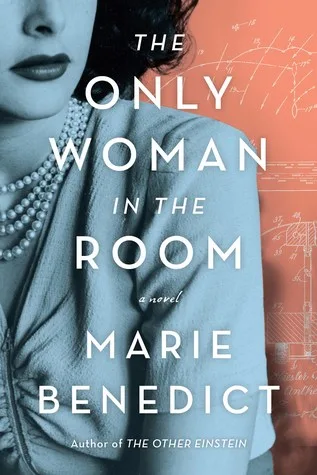
Marie Benedict recreates the career of Rosalind Franklin, focusing on her research at King’s College London during the early 1950s. The narrative details Franklin’s expertise in X-ray crystallography and her production of Photograph 51, the image that revealed the double helix structure of DNA. The plot tracks the tension between Franklin and Maurice Wilkins, leading to the unauthorized sharing of her data with James Watson and Francis Crick. Benedict depicts the physical toll of radiation exposure and the professional isolation Franklin faced as she prioritized experimental accuracy over academic politics.
Readers of historical fiction and biographies of women in STEM find this account useful for understanding the specific mechanics of academic credit and gender bias. It appeals to those interested in the history of molecular biology and the ethical failures surrounding the Nobel Prize-winning discovery of DNA. The reader leaves with a technical timeline of Franklin’s contributions to virology and genetics, along with a clear view of the institutional structures that allowed her colleagues to bypass her consent and claim her findings as their own.
Insights from Her Hidden Genius
“I let the data speak for itself.”
Rosalind Franklin basically lived for those tiny gray shadows on X-ray film. She saw the structure of life when no one else could even imagine it.
“In Paris, I was simply a scientist.”
Living in Paris seemed like the only time she truly breathed. The lab there actually felt like a community instead of a battlefield.
Maurice Wilkins just couldn't handle a woman who was his equal. His insecurity eventually cost her the credit she earned through years of work.
“Science and everyday life cannot and should not be separated.”
She spent thousands of hours perfecting a single image of DNA. Photo 51 wasn't a lucky break. It was pure, stubborn perfectionism.
- Published
- 2022
- Publisher
- Sourcebooks Landmark
- ISBN
- 9781728229409
- Language
- EN