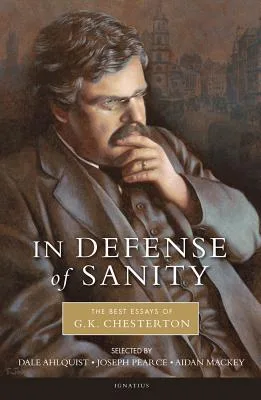
In this 1905 collection of essays, G.K. Chesterton argues that a person’s core cosmology is their most practical and consequential attribute. He challenges the standard secularism of his era by critiquing specific contemporary thinkers, including H.G. Wells, George Bernard Shaw, and Rudyard Kipling. Chesterton asserts that modern philosophy has become shallow by focusing on progress without defining a destination. He defends the necessity of dogma and orthodoxy, contending that without a fixed moral framework, society cannot effectively rebel against injustice or achieve true sanity.
Readers interested in the intersection of theology and social critique find here a defense of traditional values against the trends of late Victorian intellectualism. Those who study logic and rhetoric value Chesterton’s use of paradox to expose contradictions in popular skepticism. The book provides a intellectual foundation for maintaining objective truth in an age of relativism. Readers finish the text with a clearer understanding of why specific religious convictions are required to sustain common sense and human joy in the face of modern nihilism.
- Published
- 1905
- Language
- EN