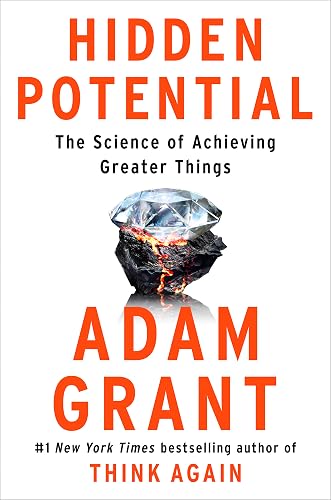
Hidden Potential: The Science of Achieving Greater Things
In Hidden Potential, Adam Grant argues that success is not a byproduct of innate talent but a result of character skills developed over time. He introduces a framework focused on three pillars: character skills like proactivity and discipline, scaffolding systems that provide external support, and institutional reforms that create equal opportunities. Grant investigates how high achievers utilize "deliberate play" to avoid burnout and why "imperfectionism" functions as a more effective strategy than striving for flawless results. He uses examples ranging from polyglots to chess champions to show that the distance traveled matters more than the starting point, emphasizing that discomfort is a primary engine for cognitive growth.
This book serves professionals, educators, and leaders who want to identify unrecognized talent in themselves or their teams. Readers use these insights to replace traditional performance metrics with evaluations centered on improvement rates and resilience. By applying these psychological principles, individuals walk away with practical methods for seeking corrective feedback and building support systems that sustain long-term progress. They learn to value the process of building endurance over the mere exhibition of natural ability.
Insights from Hidden Potential: The Science of Achieving Greater Things
“Character is often confused with personality, but they are not the same.”
Character is more about your habits than your personality. Real growth happens when you choose to act against your natural instincts.
“The hallmark of a sponge is that they don’t just take in information; they filter it.”
Being a sponge means filtering out the noise. It is about absorbing what helps you grow and ignoring the rest.
“If you wait until you’re ready to try something new, you might never start.”
Seeking discomfort is the only way to get better. If you wait until you feel ready, you have waited too long.
“The best way to learn is to make mistakes in front of others.”
Mistakes are the best way to learn a new language or skill. People who make more errors early on actually end up more fluent.
- Published
- 2023
- Language
- EN
More by Adam M. Grant
See all →
Readers also enjoyed