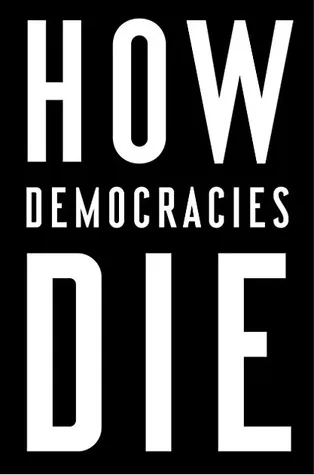
How Democracies Die: What History Reveals About Our Future
Steven Levitsky and Daniel Ziblatt argue that modern democracies rarely collapse through violent military coups but instead erode from within through the legal subversion of institutions. They identify the decay of two unwritten democratic norms—mutual toleration and institutional forbearance—as the primary drivers of this decline. Using historical case studies from Latin America and 1930s Europe, the authors demonstrate how elected autocrats use the machinery of the state to sideline critics and capture the judiciary. The text details a four-part litmus test for identifying authoritarian behavior in political candidates, focusing on the rejection of democratic rules and the encouragement of political violence.
This book serves readers interested in political science and historical institutionalism who want to understand the structural vulnerabilities of the American executive branch. It provides a framework for recognizing the early warning signs of democratic backsliding before constitutional crises occur. Readers walk away with a specific vocabulary for analyzing how the erosion of partisan civility leads to the weaponization of law. It offers a comparative perspective that places current political polarization within a global context of institutional failure.
Outward-looking and clear-cut; a moderate read.
Best for readers like The Evidence Seeker. Which reader are you?
- Published
- 2018
- Language
- EN