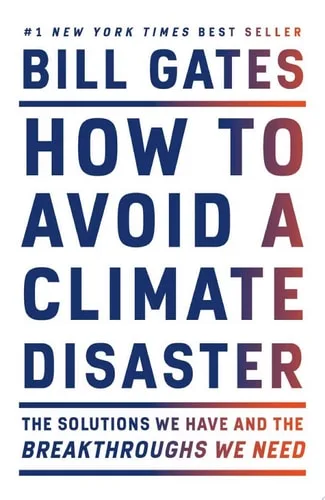
Bill Gates outlines a technological and economic roadmap to reach net-zero greenhouse gas emissions by 2050. He categorizes global emissions into five main activities: making things like steel and cement, plugging in via the electric grid, growing food, getting around, and staying warm or cool. The text introduces the concept of Green Premiums, which represents the additional cost of choosing a clean technology over one that emits carbon. Gates argues that innovation must lower these premiums to make carbon-neutral solutions affordable for developing nations through carbon capture, green hydrogen, and advanced nuclear power.
This book targets policymakers, engineers, and citizens who want a data-driven strategy for environmental policy rather than moral philosophy. Readers learn how specific sectors contribute to the 51 billion tons of gas added to the atmosphere annually and identify which industries require the most urgent investment. By the end, the reader possesses a framework for evaluating climate solutions based on their scalability and cost-efficiency. It provides a practical vocabulary for discussing energy transitions and the infrastructure shifts necessary to stabilize the global temperature.
Insights from How to Avoid a Climate Disaster
“We need to get to zero.”
Zero is the only number that matters. We need to stop adding carbon entirely. Cutting back just isn't enough.
Poor farmers will get hit first. They didn't cause this mess but they will lose everything. It makes me so angry.
Nuclear power is the only way to get enough reliable energy. Wind and solar are great but they need a backup. We have to get over our fear.
Carbon capture technology is way too expensive right now. We have to drive that price down fast. Otherwise we are finished.
- Published
- 2021
- Publisher
- Random House Digital Inc.
- ISBN
- 9780385546140
- Language
- EN