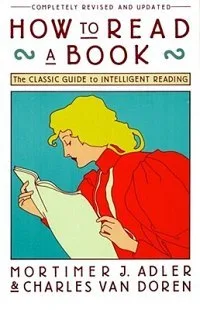
How to Read a Book: The Classic Guide to Intelligent Reading
Mortimer J. Adler details a systematic hierarchy of reading skills designed to extract maximum comprehension from complex texts. He establishes four distinct levels: elementary reading, inspectional reading, analytical reading, and syntopical reading. The methodology provides specific rules for classifying a book’s subject matter, x-raying its logical structure through outlining, and defining the author’s specific keywords. Adler argues that active reading requires a person to move beyond passive absorption to engage in a mental dialogue with the author, eventually comparing multiple texts on the same subject to form an independent conclusion.
Students, researchers, and lifelong learners use this guide to improve their concentration and information retention. It is intended for those who need to master difficult non-fiction or classical literature without external assistance. By applying these techniques, readers gain the ability to strip away rhetorical flourishes, identify an author’s core arguments, and determine whether they agree or disagree based on logical evidence. The final result is a shift from mere literacy to a rigorous standard of critical thinking.
Growth-minded and clear-cut; a moderate read.
Best for readers like The Evidence Seeker. Which reader are you?
Insights from How to Read a Book: The Classic Guide to Intelligent Reading
“Reading is a conversation.”
Reading is basically a conversation between you and the writer. It works best when you show up as an equal rather than just an observer.
“Every book should be read no more slowly than it deserves.”
Skimming is a legitimate skill for busy people. Checking the table of contents and the index saves hours of wasted energy.
“You must be able to say, with reasonable certainty, 'I understand.'”
True understanding happens when you can explain a writer's point better than they did. It took me a while to see that gap.
“Full ownership comes only when you have made it a part of yourself.”
Marking up the margins makes the book your own. Those scribbles are the footprints of your thinking process.
- Published
- 1940
- Publisher
- Simon & Schuster, Inc
- ISBN
- 9780671212094
- Language
- EN