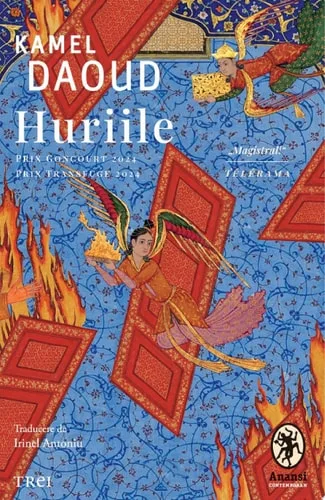
In Algeria during the Black Decade of the 1990s, Aube survives a physical assault that leaves her with a permanent scar across her neck and a silenced voice. Moving through Oran and the rural interior, she carries a secret pregnancy and speaks internally to the child she might not bring into the world. The narrative contrasts the historical reality of civil war massacres with the forced national silence imposed by the Charter for Peace and National Reconciliation. Through Aube's silent monologue, the text documents the physical trauma of religious extremism and the bureaucracy of forgetting.
Readers of North African literature and political fiction use this work to understand the specific intersection of gender and state-mandated amnesia in post-conflict societies. It provides a direct view into how collective guilt and individual survival interact when laws prevent the public naming of past crimes. The reader gains a stark perspective on the human body as a living archive of historical violence. Those following the evolution of Algerian identity after 1962 will find a dissection of the tensions between religious traditionalism and the right to personal memory.
Insights from Huriile
Râsul este uneori singura formă de rezistență care le-a mai rămas. Chiar și fără corzi vocale, Aube găsește o cale să se exprime.
“Huriile nu au cicatrici, eu am.”
Religiile promit huriile în paradis pentru bărbații care mor luptând. Pe pământ, femeile reale sunt uitate sau reduse la tăcere.
“Sunt o urmă, nu o voce.”
Aube poartă o cicatrice pe gât care îi fură vocea. E un semn brutal al unui trecut pe care toată lumea vrea să îl uite.
Femeile din Algeria poartă greutatea unui război civil care s-a terminat oficial. Ele trăiesc într-o tăcere impusă de legi care iartă criminalii.
- Published
- 2025
- Publisher
- Editura Trei
- ISBN
- 9786064026736
- Language
- RO