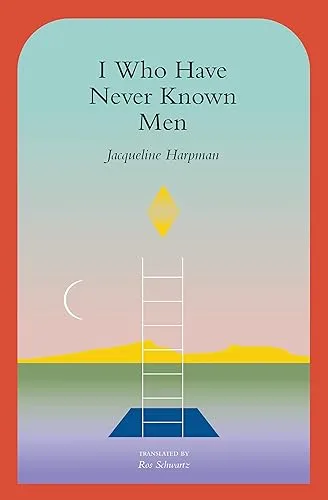
I Who Have Never Known Men
Forty women live in an underground cage, guarded by silent men who never speak or touch them. The youngest prisoner has no memory of the world outside or the event that led to their incarceration. When a sudden siren sounds and the guards vanish, the women escape into a silent, barren landscape devoid of other human life. They wander across an endless plain, discovering identical bunkers filled with corpses and supplies. The narrator, disconnected from the social structures and sexual experiences of the older women, documents their gradual deaths and her own solitude as the last survivor of a species that has lost its history and its future.
Readers of specimen fiction and bleak existentialism value this book for its refusal to provide easy answers or traditional world-building. It attracts those interested in how human identity functions when stripped of culture, gender roles, and biological reproduction. The reader finishes the account with a stark view of loneliness and the limitations of memory. It serves as a study of how an individual maintains a sense of self in a vacuum where language and civilization have no purpose, leaving only the physical reality of a body in a vacant world.
Deep, inward-looking, contemplative, open-ended and thought-provoking; a moderate read.
Best for readers like The Wisdom Collector. Which reader are you?
Insights from I Who Have Never Known Men
“I had no past, no name, no age, and no one to love.”
The women stayed in that cage for years with no memories of their own names. It shows how much we rely on others to mirror who we are.
Watching forty women die one by one in those cages was brutal. They didn't have a god or a history. They just had each other and the silence.
“She spoke to me of things I did not know.”
Anthea kept her mind alive by teaching the narrator things she could barely remember. Even in a wasteland, we try to pass something down to the next person.
“I was the only one who didn't cry.”
The narrator didn't have a mother to teach her how to feel. She had to learn what grief was by watching the older women cry.
- Published
- 1995
- Publisher
- Vintage Digital
- ISBN
- 9781529111798
- Language
- EN