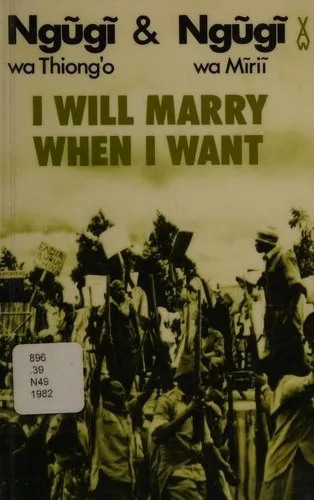
Set in post-independence Kenya, this play depicts the life of Kĩguunda, a poor farm laborer who owns a small plot of ancestral land. The plot centers on the manipulation of Kĩguunda and his wife, Wangeci, by their wealthy Christian neighbors, Kĩoi and Jezebel. Through a deceptive religious marriage proposal intended to unite their children, the elite family maneuvers to seize Kĩguunda’s land for a multinational laboratory project. The narrative uses Gĩkũyũ cultural songs and dance to illustrate how local elites use religion and international capitalism to exploit the working class, mirroring the colonial structures they replaced.
Readers interested in the intersection of African political history and theater will find this a blunt assessment of neocolonialism. It serves those studying how language and performance function as tools for grassroots mobilization and class consciousness. The audience walks away with a clear understanding of the economic struggle between the landless peasantry and the landed elite, alongside the specific tactics used to maintain social inequality after formal colonial rule ends.
- Published
- 1977
- Language
- EN