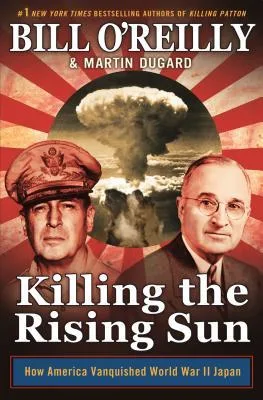
Bill O'Reilly and Martin Dugard detail the strategic and political environment of the Pacific Theater during the final stages of World War II. The narrative follows the progression of the island-hopping campaign, highlighting the tactical decisions of General Douglas MacArthur and the brutal combat on Peliliu, Iwo Jima, and Okinawa. The authors examine the Manhattan Project’s race to develop the atomic bomb and the immense pressure placed on Harry Truman following FDR’s death. The account culminates in the transition from conventional firebombing to the nuclear strikes on Hiroshima and Nagasaki, which forced the Japanese Emperor to surrender.
This history is written for readers who prefer fast-paced, chronological descriptions of military operations and high-stakes diplomacy. It provides a granular look at the motivations of both American political leaders and Japanese commanders during an era of total war. Readers walk away with a specific understanding of why the United States chose nuclear weapons over a sea-borne invasion of the Japanese mainland. The text serves as an overview of the logistical challenges and moral dilemmas that brought the conflict in the Pacific to a sudden, violent conclusion.
Practical, outward-looking and clear-cut; an easy read.
Best for readers like The Practical Optimizer. Which reader are you?
- Published
- 2016
- Language
- EN
More by Bill O'Reilly
See all →
Books like Killing the Rising Sun: How America Vanquished World War II Japan
See all 12 →