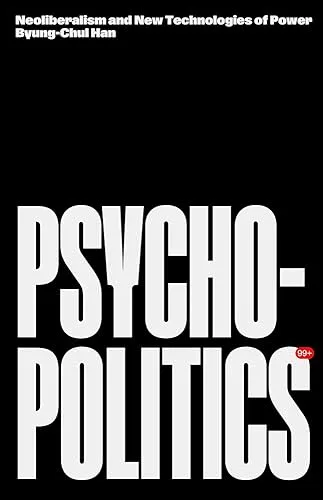
Byung-Chul Han argues that the contemporary obsession with openness has created an environment of systemic exposure rather than true democracy. He defines transparency not as a tool for political accountability, but as a coercive force that flattens human experience by removing mystery and ambiguity. Han examines how the digital demand for visibility turns subjects into commodities, where everything must be measurable, comparable, and instantly consumable. This process results in a "society of positive" where negative emotions, distance, and privacy are eliminated in favor of a constant, exhausted state of self-production and digital surveillance.
Social theorists, digital privacy advocates, and students of philosophy read this book to understand the psychological toll of hyper-connectivity. It appeals to those concerned with how social media and data tracking erode the capacity for contemplative thought and authentic intimacy. Readers gain a framework for seeing transparency as a form of structural violence that enforces conformity. The text provides a vocabulary to describe why constant visibility leads to mental burnout and the dissolution of the private sphere in the twenty-first century.
- Published
- 2012
- Language
- EN