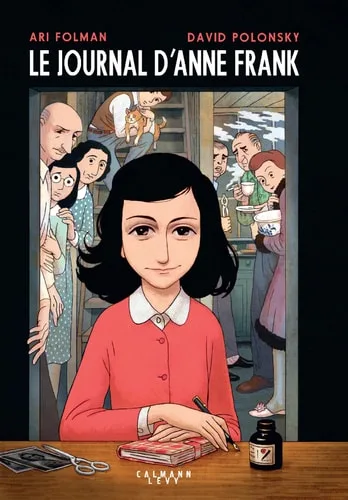
In this 2017 graphic adaptation, Ari Folman translates the diary of Anne Frank into a visual narrative. The story tracks the life of a Jewish teenager living in a concealed annex in German-occupied Amsterdam between 1942 and 1944. David Polonsky’s illustrations visualize Anne’s daily interactions with her family and the Van Pels, her evolving internal thoughts on identity, and the constant threat of discovery. The text focuses on the physical confinement of the Secret Annex, rationing logistics, and the specific emotional shifts of a girl entering puberty under siege.
This version serves readers who prefer visual storytelling or those seeking a new perspective on World War II history. It bridges the gap between historical documentation and modern illustration, providing a concrete spatial layout of the Annex through diagrams and panels. Readers finish the book with a clear mental map of the occupants' living conditions and a direct understanding of how adolescence persists despite state-sponsored persecution. It offers a factual account of life in hiding while prioritizing the specific, personal voice of the original journals.
Insights from Le Journal d'Anne Frank
“Pourquoi les adultes sont-ils si bêtes et si peu compréhensifs ?”
Anne est une ado insupportable et géniale à la fois. Ses disputes avec sa mère sont d'une violence hyper familière. On oublie trop souvent qu'elle n'était pas qu'une victime.
La faim rend les gens hideux. On voit la haine monter pour un morceau de pain ou une pomme de terre. L'enfermement détruit la morale bien avant les soldats.
“Peter est un garçon très gentil, mais il n'a aucune volonté.”
Peter est une déception monumentale. Il est mou et n'a aucune conversation. Anne s'accroche à lui juste parce qu'il est là.
L'Annexe est une cocotte-minute infernale. Le moindre bruit de chasse d'eau devient une menace de mort. C'est le suspense le plus étouffant que j'ai lu.
- Published
- 2017
- Publisher
- CALMANN-LEVY
- ISBN
- 9782702166789
- Language
- FR