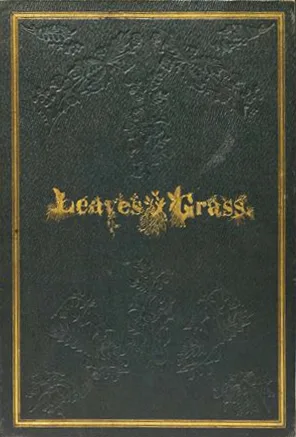
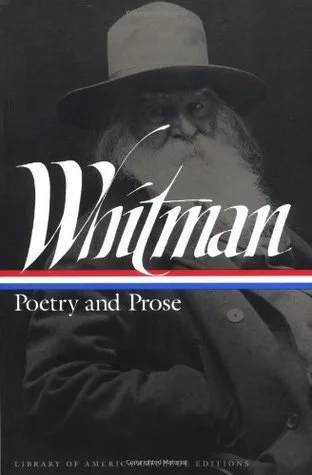
Walt Whitman’s collection centers on the interconnectedness of the human body, the natural world, and the American democratic experiment. Writing in a new form of rhythmic free verse, Whitman rejects traditional meter to catalog the lived experiences of laborers, shipbuilders, and urban wanderers. He positions the individual "I" as a vessel for the collective, equating physical sensations and sexual vitality with spiritual identity. The text frames the grass as a recurring symbol of life's cyclical continuity, arguing that every atom belonging to one person belongs equally to another.
Readers of nineteenth-century literature and philosophy turn to this work to understand the shift from formal Victorian aesthetics to raw, sensory realism. It appeals to those interested in the relationship between physical health, labor, and civic duty. A reader walks away with a framework for viewing the common person as a sacred figure. The book provides a technical template for modern poetry while offering a vision of American life where the material world and the human soul are indistinguishable from one another.
- Published
- 1855
- Language
- EN
![The United States in Literature [with three long stories] -- Seventh Edition](https://kwbjoqloympvbpzbrfja.supabase.co/storage/v1/object/public/scan-images/catalog/f48162c6-7eb5-41ec-933b-9c4218489c7d-full.webp)