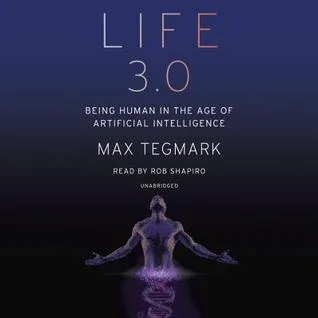
Life 3.0: Being Human in the Age of Artificial Intelligence
Max Tegmark categorizes the history of life into three distinct stages based on the complexity of hardware and software. Life 1.0 represents simple biological evolution, while Life 2.0 characterizes humans who can learn and adapt their cultural software. Life 3.0 focuses on the potential for technological hardware that can redesign its own internal architecture. The text examines the alignment problem, investigating how to ensure autonomous systems adhere to human goals and the physical limits of computing power in the universe. Tegmark outlines various future scenarios ranging from utopian cooperation between carbon-based and silicon-based life to the total extinction of the human race by superintelligence.
This book serves readers interested in the technical and ethical implications of machine learning and large-scale automation. It attracts those who want to understand the difference between narrow intelligence and general artificial intelligence. Readers gain a framework for analyzing how labor markets, warfare, and legal systems might function when human cognition is no longer the dominant force. The material provides a logical foundation for participating in the global conversation regarding safety protocols and architectural standards for developing advanced synthetic minds.
Outward-looking; a moderate read.
Best for readers like The Systems Thinker. Which reader are you?
- Published
- 2017
- Language
- EN