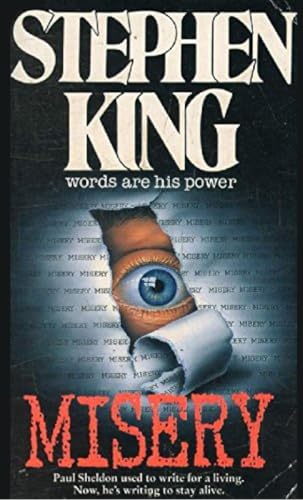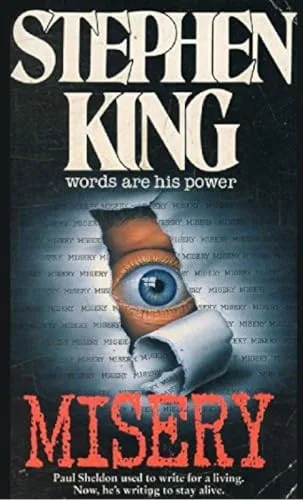
Paul Sheldon, a successful novelist, survives a car crash during a blizzard only to be rescued by Annie Wilkes, a former nurse who claims to be his greatest fan. Trapped in her remote home, Paul discovers Annie is furious that he killed off her favorite character, Misery Chastain, in his latest manuscript. She burns his unpublished work and forces him to write a new novel that resurrects the heroine. Under the threat of physical mutilation and restricted access to pain medication, Paul uses a manual typewriter to craft a story while plotting a desperate escape.
Fans of psychological suspense and visceral horror read this book to witness a raw depiction of the relationship between an artist and an obsessive audience. The narrative focuses on the mechanics of addiction and the sheer physicality of survival under confinement. Readers walk away with a stark understanding of how isolation warps the human mind and the lengths a person will go to protect their creative identity. It provides a technical look at the drafting process as a tool for psychological endurance.
Escapist; an easy read.
Best for readers like The Escapist Adventurer. Which reader are you?
Insights from Misery
“I'm your number one fan.”
Annie Wilkes makes you realize that obsession feels a lot like love until the cage doors shut. Her kindness is actually the scariest part of the house.
“Writing is a way of saying I was here.”
Paul Sheldon ends up writing his best work while he is literally falling apart. It makes me wonder if great art always demands a piece of the person making it.
“The n was gone. The e was gone. The t was gone.”
The typewriter with the missing letters feels like a character itself. It shows how much you can endure when you have a specific job to finish.
“He was a man who lived in a world of hurt.”
Pain becomes a clock in that guest room. Everything revolves around when the next pill is coming and what Paul has to trade for it.
- Published
- 1987
- Language
- EN