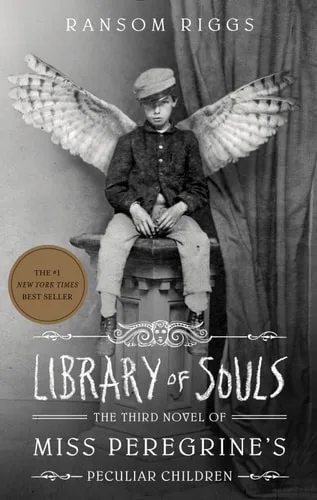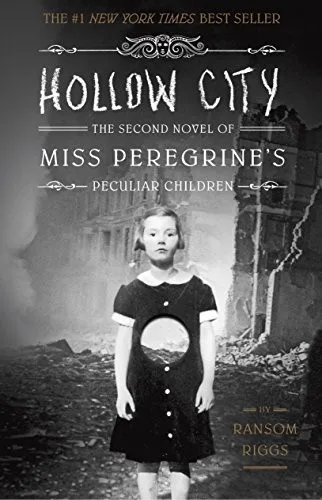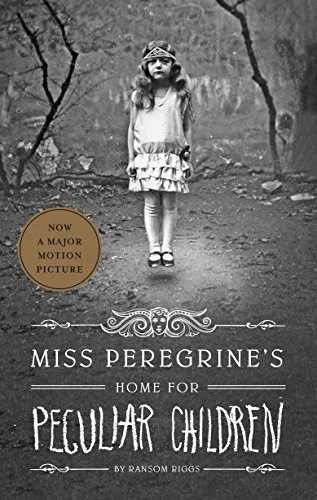
Miss Peregrine's Home for Peculiar Children
Following his grandfather’s violent death, sixteen-year-old Jacob Portman travels to a remote Welsh island to investigate a collection of weathered vintage photographs. He discovers the ruins of Miss Peregrine’s Home for Peculiar Children, where he learns that the residents are not merely legends. These teenagers possess biological anomalies, such as invisibility or extreme strength, and live protected within a temporal loop that repeats a single day in 1940. Jacob must decide if his own heritage ties him to this hidden world as predatory monsters called hollowgasts begin hunting the group.
Readers of supernatural mystery and gothic fiction choose this book for its integration of authentic, eerie photography with a modern prose narrative. The story appeals to those interested in secret histories and the concept of hidden societies existing alongside the physical world. By the end, the reader understands the mechanics of time manipulation in this universe and the specific biological traits that separate the peculiar from the common. It provides a structured mythology for fans of ensemble-based survival stories.
Insights from Miss Peregrine's Home for Peculiar Children
“I had just come to accept that my life would be ordinary when extraordinary things began to happen.”
Jacob discovering his grandfather wasn't just losing his mind is heartbreaking. Those old stories were actually warnings he couldn't decode in time.
“We cling to our fairy tales until the price for believing in them becomes too high.”
Living the same sunny day forever sounds like a dream until you realize it's just a gilded cage. Miss Peregrine keeps them safe, but they never get to grow up.
Millard being invisible is so much more than a cool trick. It highlights how lonely it feels when people look right through you.
“Photographs are the only things that survive the passage of time.”
Looking at those creepy black and white photos makes the monsters feel way too real. Seeing is believing, and those images don't let you look away.
- Published
- 2011
- Language
- EN