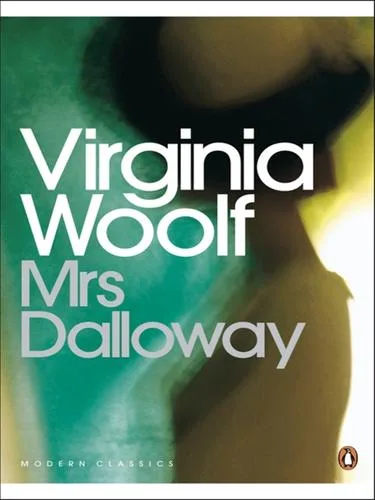
Clarissa Dalloway spends a June Wednesday in 1925 London purchasing flowers and preparing her home for an evening gala. As she traverses the city, the narrative shifts between her internal monologues and those of Septimus Smith, a veteran suffering from terminal shell shock. The story tracks Clarissa’s reflections on her youthful rejection of Peter Walsh and her marriage to Richard Dalloway, a member of Parliament. Simultaneously, it documents Septimus’s mental collapse and eventual suicide, framing his death as a counterpoint to the rigid social hierarchies and political stability Clarissa represents.
Readers interested in the evolution of modern consciousness and the lingering psychological damage of the Great War will find this a precise study of human interiority. It attracts those who value detailed observations of social class and the non-linear way memory interrupts present actions. The reader gains an understanding of how individual identity is constructed through fragmented thoughts and how public facades mask private trauma. It provides a stark look at the isolation inherent in high society and the failure of medical institutions to address mental illness.
Deep, inward-looking, contemplative, open-ended and thought-provoking; a demanding read.
Best for readers like The Wisdom Collector. Which reader are you?
Insights from Mrs. Dalloway
“Mrs. Dalloway said she would buy the flowers herself.”
Clarissa buying those flowers herself feels so small. It shows how we use tiny errands to keep from sinking into our own heads.
“He opened his big blade; he closed it.”
Peter Walsh still carries that pocket knife everywhere. It reminds me how we cling to old habits to feel sharp when we actually feel lost.
“The world wavered and quivered and burst into flame.”
Septimus sees beauty in the sky while his mind is breaking. It made me realize that madness and clarity often share the same view.
“The strange thing was the things one remembered.”
Sally Seton was the wild girl who became a housewife with five sons. It is strange how the people who scare us most often end up the most ordinary.
- Published
- 1925
- Publisher
- Houghton Mifflin Harcourt
- ISBN
- 9780151009985
- Language
- EN
Quotes by Virginia Woolf
More →There is no gate, no lock, no bolt that you can set upon the freedom of my mind.
A Room of One's Own
One cannot think well, love well, sleep well, if one has not dined well.
A Room of One's Own