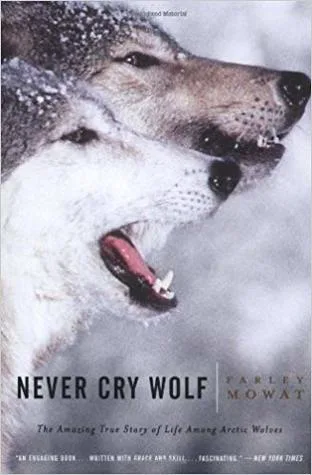
Never Cry Wolf: The Amazing True Story of Life Among Arctic Wolves
In 1948, the Canadian Wildlife Service dispatched biologist Farley Mowat to the Keewatin Barrens to document the perceived slaughter of caribou herds by Arctic wolves. Living in isolation near a den site, Mowat observed a family of wolves he named George, Angeline, and Uncle Albert. His field observations challenged the "savage killer" stereotype, revealing that the predators survived largely on small rodents like meadow mice rather than big game. He details how wolves maintain the health of caribou populations by culling the diseased and weak, while also documenting the complex social bonds and communicative abilities within the pack.
Field biologists and conservationists read this book to understand the shift from traditional predator control policies to modern ecosystem management. It serves as a study of ethology and the practical difficulties of remote wilderness research. Readers gain a technical perspective on the symbiotic relationship between predator and prey, along with a critique of bureaucratic science. The text provides a framework for viewing carnivorous mammals as integral components of a balanced environment rather than pests to be eradicated for human convenience.
Outward-looking and clear-cut; an easy read.
Best for readers like The Evidence Seeker. Which reader are you?
- Published
- 1963
- Language
- EN
More by Farley Mowat
See all →
Books like Never Cry Wolf: The Amazing True Story of Life Among Arctic Wolves
See all 12 →