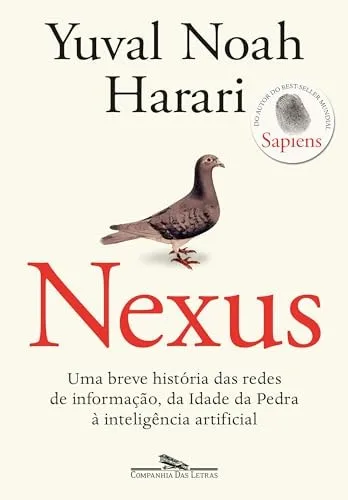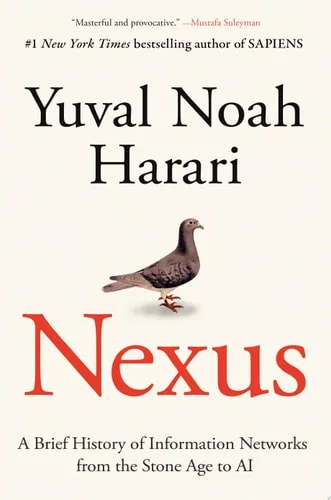
Nexus A Brief History of Information Networks from the Stone Age to AI
In Nexus, Yuval Noah Harari examines how information networks function as a mechanism for social control and institutional structure rather than merely a path to truth. He rejects the assumption that more information leads to greater wisdom, instead tracing how centralized bureaucracies, religious canons, and political ideologies have used data to achieve mass cooperation. The narrative moves from the physical limitations of clay tablets and the printing press to the autonomous nature of silicon-based intelligence. Harari argues that contemporary AI represents a shift from tools controlled by humans to independent agents capable of making decisions that bypass traditional human oversight.
Readers interested in the intersection of data science and historical sociology will find this a pragmatic analysis of how technology shapes governance. The book appeals to those seeking a framework to understand why digital connectivity often correlates with social fragmentation and the erosion of democratic norms. By the end, the reader understands the structural difference between organic human storytelling and algorithmic feedback loops. This perspective provides a sober look at how silicon intelligence creates new social realities that differ fundamentally from established historical patterns.
Insights from Nexus A Brief History of Information Networks from the Stone Age to AI
“Truth is a costly and rare resource, whereas fictions and fantasies are cheap and abundant.”
Information usually spreads because it is simple or exciting. Truth is complicated and boring. Networks naturally prefer the exciting lies over the dull facts.
Bureaucracies were the first form of non-biological intelligence. They process people like data points. Individual humanity gets lost in the paperwork filing system.
Ancient holy books acted like early algorithms. They decided what was good or evil for millions. We are just handing that power to silicon now.
“Computers are not like printing presses. They are like silicon-based bureaucrats.”
AI is the first technology that can make its own decisions. It is not just a tool like a hammer. It is an independent agent with its own goals.
- Published
- 2024
- Publisher
- Random House Publishing Group
- ISBN
- 9780593734223
- Language
- EN