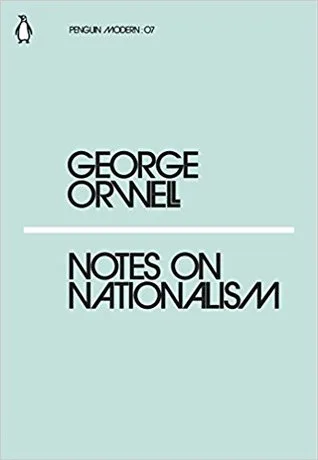
In this 1945 essay, George Orwell defines nationalism not as simple patriotism, but as the habit of identifying oneself with a single unit and placing it beyond good and evil. He argues that the nationalist obsession leads to the falsification of past and present facts to suit a specific political agenda. Orwell categorizes these mindsets into three distinct patterns: obsession, instability, and indifference to reality. He analyzes how movements like Communism, Zionism, and Pacifism can function as nationalist frameworks where followers ignore atrocities committed by their own side while obsessing over those committed by rivals.
Political science students and history enthusiasts read this text to understand the psychological roots of tribalism and ideological blindness. The essay provides a framework for identifying cognitive bias and the selective use of evidence in public debate. Readers walk away with a toolset for spotting intellectual dishonesty in their own circles. The text serves as a manual for maintaining objective thought when confronted with polarizing group loyalties and propaganda. By the final page, the reader learns to distinguish between a healthy affection for a place and a competitive desire for prestige.
- Published
- 2012
- Language
- EN
Quotes by George Orwell
More →Who controls the past controls the future. Who controls the present controls the past.
1984
All animals are equal, but some animals are more equal than others.
Animal Farm
In a time of deceit, telling the truth is a revolutionary act.
More by George Orwell
See all →



Readers also enjoyed